Online proofing for commercial printers
Take the soft proof one step further: show the brochure folded, the folder with its pockets, the stationery on the stock you quoted, and get a documented sign-off before makeready.
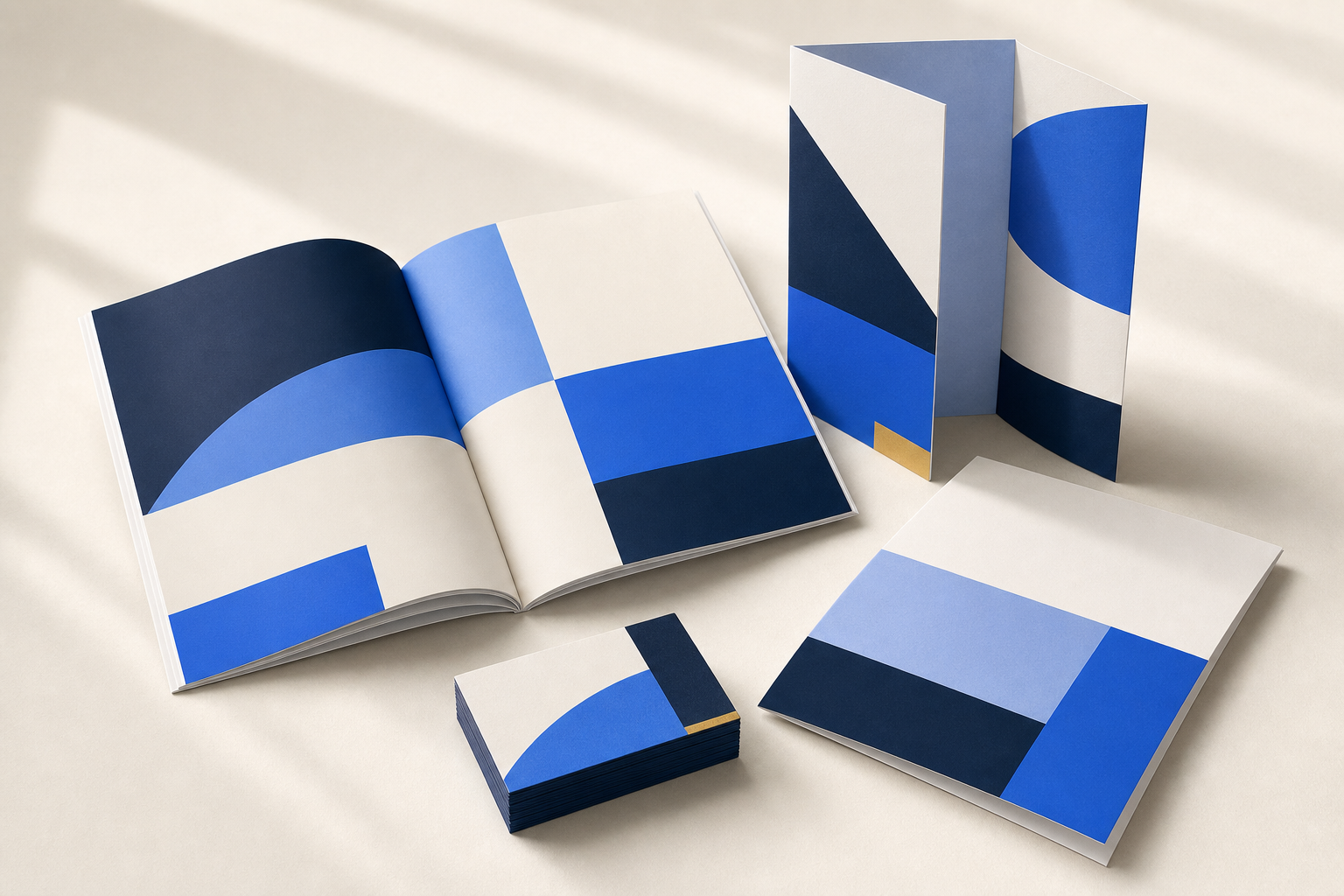
Your customer ordered a printed thing, not a PDF
Folds, stocks, pockets and finishes are what make a commercial job worth what it costs, and they are exactly what a flat proof cannot show.
Folded work, actually folded
Roll folds, gate folds, Z-folds and French-folded invitations are approved as page pairs and delivered as objects. Showing the folded piece means the panel order and the reading sequence get checked before the folder is set up.
Presentation folders with the pockets in
Pockets, business-card slits, glued edges and spine widths are structural decisions that a flat imposition hides. A 3D folder shows the customer what they are buying, including how the pocket crops the artwork behind it.
Stock and finish you can see
Uncoated versus silk, a heavier cover weight, soft-touch lamination, spot UV on a business card or a foiled letterhead: the upsell only sells if the customer can see the difference at proof stage.
One documented sign-off
A branded link, a clear approval action and a record of exactly what was approved and when. That record is what settles the conversation if a job is ever questioned after delivery.
From soft proof to signed-off product
General commercial work is a volume business built on repeat customers, and its approval process has barely changed: preflight, impose, export a PDF, email it, wait. The soft proof does its job for content and color intent. What it does not do is show the customer the object, and the object is what they will hold, judge and pay for.
That is where the avoidable rework lives. A six-page roll fold gets approved as three spreads and arrives with the panels reading in an order nobody pictured. A presentation folder gets approved flat and the pocket covers the bottom third of the artwork. A customer who agreed to uncoated stock over the phone sees the printed piece and asks why it is not as bright as the screen. None of that is a press error, and all of it costs a reprint or a credit.
ProofScene turns the proof you already produce into an interactive 3D piece. The customer opens a branded link, turns the brochure, opens the fold, sees the pocket and the stock and the lamination, then approves. You keep the documented sign-off, tied to the exact version they saw, which is the part that matters when a job is questioned three weeks later.
Related pages: online proofing software, customer artwork sign-off, print embellishment visualization, and the guide on digital vs soft vs contract proofs.
Commercial print proofing, answered
Short, straight answers to the questions we are asked most. If yours is not here, ask.
Ask us anythingWhat is online proofing for commercial printers?
Online proofing lets a customer review and approve artwork in a browser instead of by emailed PDF. ProofScene adds a 3D step on top of that: the brochure is shown folded, the folder shown with its pockets, the stationery set shown on the stock you quoted, so the customer approves the printed object rather than a page of it.
How is a 3D proof different from the soft proof we already send?
A soft proof shows the pages as they will image. A 3D proof shows the product as it will be finished: folded, bound, laminated and trimmed. Most shops keep both, because they answer different questions and get signed by different people.
Does it work with our existing prepress workflow?
ProofScene is designed to start from the proof artwork you already produce, so it sits alongside your imposition, preflight and color steps rather than replacing them.
Can it show folds, pockets and binding?
Yes. Fold styles, presentation folder pockets, spine widths and bound sections can be represented so the customer sees the finished structure and panel sequence rather than an imposed flat.
Is a 3D proof a replacement for a contract proof?
No. It represents appearance, placement, stock and finishing for visual approval. Color-critical work should still go through your calibrated contract proofing process, since a 3D proof is not a color-managed proof unless your workflow makes it one.
Can proofs be sent under our shop's brand?
Yes. Proof links live on your own branded subdomain with optional password protection, and enterprise deployments can be fully self-hosted so nothing in the customer experience points anywhere but your shop.
Show your next job as a finished piece
ProofScene is opening early access to print shops and product suppliers. Join the list and be first to turn your proof sheets into interactive 3D approvals.
No credit card · Built by print people · Launching soon